Art Madrid'26 – ESPACIO TECTÓNICA: THE NATURE OF THE SENSIBLE

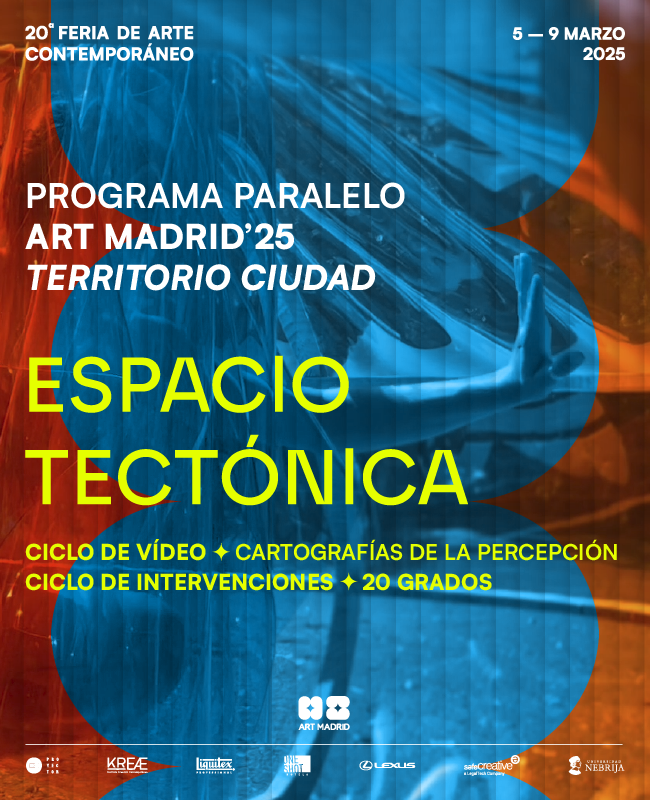
CITY TERRITORY: PARALLEL PROGRAM ART MADRID'25

ESPACIO TECTÓNICA

The city, as Henri Lefebvre argued, is not only a physical space but also a social product, a network of relations and representations that are constantly reconfigured. Its cracks, folds and vertices are more than mere accidents of the terrain, they are material manifestations of a dialectic between inhabitation and transformation. It is in this vacillation of forms and meanings that Espacio Tectónica was conceived, a place to promote the encounter between art, territory and city.

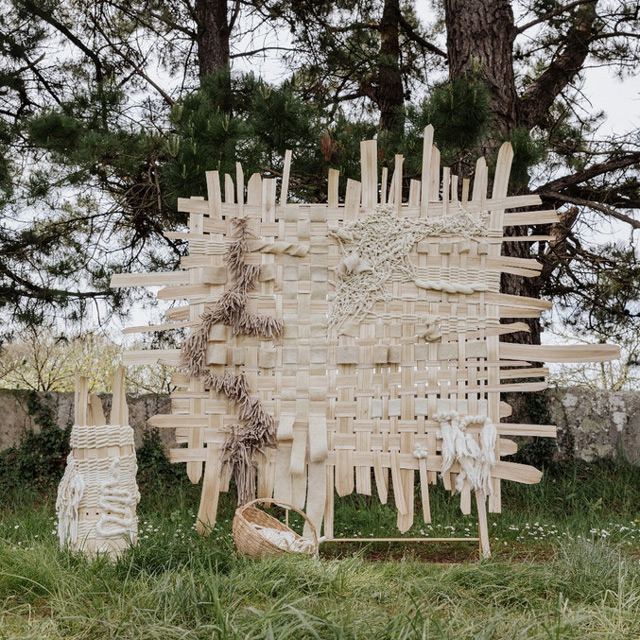
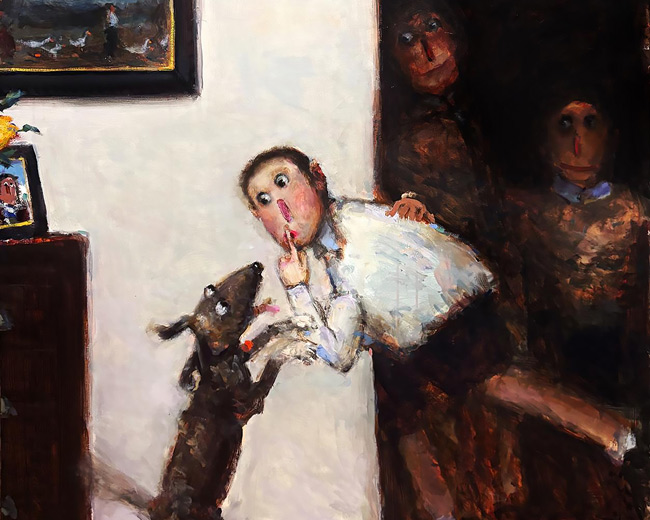
Maternidad geomética. Jeanne de Petriconi y Guillermo G. Peydró. 2023.


Inside the fair, Espacio Tectónica is configured as a space for reflection and action on our relationship with the urban environment. A space that encourages critical thinking and artistic experimentation, exploring the tensions that shape the contemporary city. Through a programme that includes a video cycle and meetings with professionals, the space invites us to think about how the city not only receives cultural practices, but also generates and transforms them. It is a field where differences and contrasts become a source of reflection and analysis, and where art becomes a tool for understanding the social and philosophical complexities of the world we inhabit. Like tectonic plates in friction, everything that happens in Espacio Tectónica shifts, collides and challenges the visitor to generate a state of questioning about how we inhabit public space.
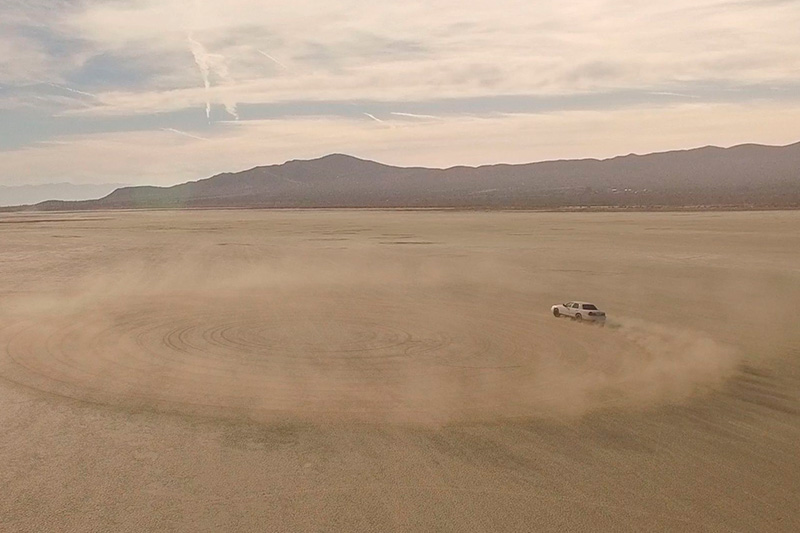

Circular Inscription. Tezi Gabunia.2016.


VIDEO CYCLE: CARTOGRAPHIES OF PERCEPTION

Under the title Cartographies of Perception, during the week of the fair, Espacio Tectónica will host this section, curated by PROYECTOR's Imagen en Movimiento platform, which presents a selection of international video art works that address issues such as migration, territoriality and the relationship between the peripheries and urban centres from a contemporary and analytical perspective. From the production of semiconductors in Taiwan to the mutation of the landscape in Brazil, video art becomes a critical tool that unravels the interactions between urban space, nature, the climate crisis and contemporary perceptions of the environment.

The works presented address migration, territoriality and the relationship between centres and peripheries, examining the city as a complex organism, at once a labyrinth and a tower of Babel. Through video, the artists reflect on the role of the individual in the transformation of architectural space and the dynamics of feedback between peripheries and urban centres in an interconnected world, inviting the viewer to expand his or her perception of the spaces he or she inhabits.

Guest artists: Ilaria Di Carlo (it), Tezi Gabunia (ge), Juan Carlos Bracho (esp), Magda Gebhardt (bra), Lukas Marxt (aut), lololol (Xia Lin y Sheryl Cheung) (tw) and Yuchi Hsiao (tw).
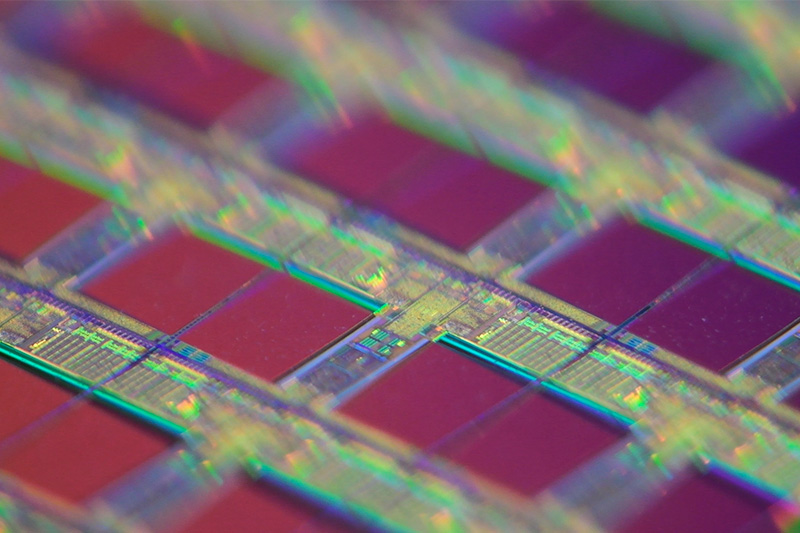

Wafer Bearer Deep Rain. lololol. Xia Lin y Sheryl Cheung. 2022


INTERVENTION CYCLE: 20 DEGREES

As part of the parallel program, Espacio Tectónica will also host the Cycle of Interventions: 20 Degrees, in which professionals from the sector: artists, researchers, professors, curators, etc. will carry out ephemeral interventions to reflect on the city as a symbolic and political space. Key issues such as migration, the evolution of urban centers and the role of the individual in the transformation and atonement of the city will be explored. Through these actions, bridges will be built between disciplines and diverse perspectives, broadening the understanding of how art feeds back into the urban fabric and how public space is a natural environment for artistic creation.

Guest artists: Susi Vetter (al), Helena Goñi (esp), Paula Lafuente (esp), Olga Mesa (esp), Elena Arroyo (esp), Amaya Hernández (esp), Deneb Martos (esp), Guillermo G. Peydró (esp) & Jeanne de Petriconi (fr), Sergio Muro (esp) y Javier Olivera (esp).
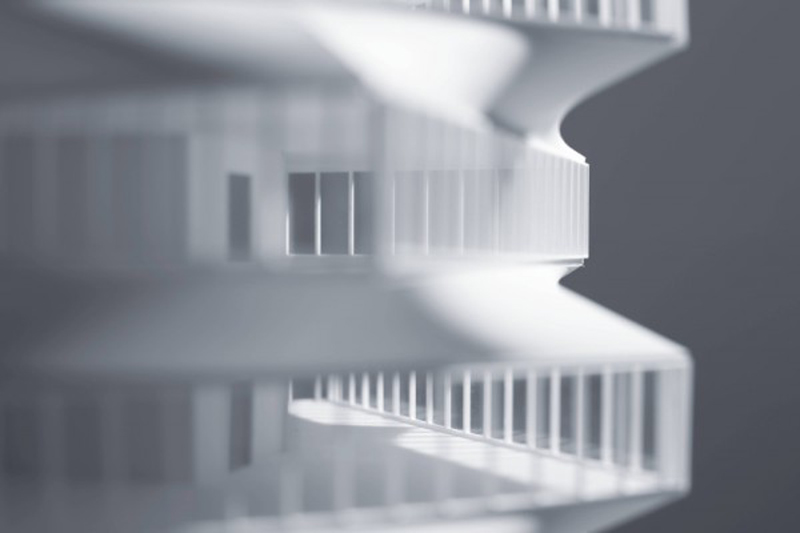

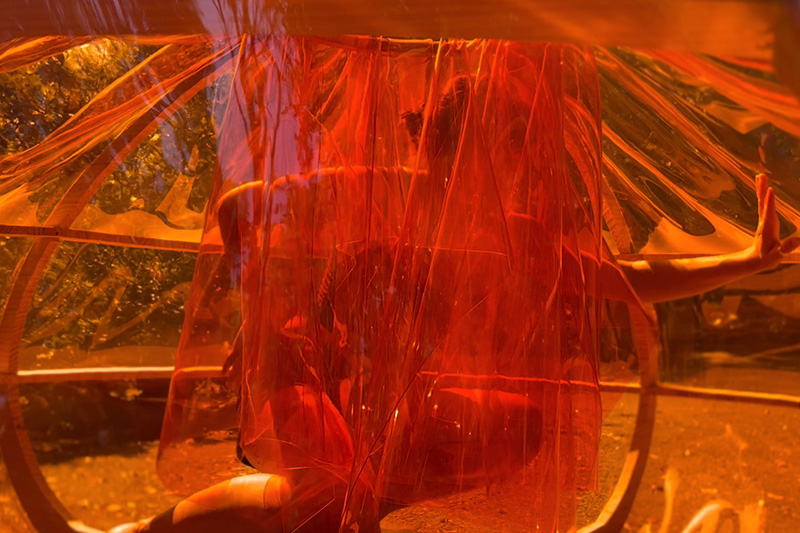
La Pagoda de Fisac II. Amaya Hernández. 2022.


Espacio Tectónica functions as a dynamic node within Art Madrid. Its rhizomatic character allows art not only to inscribe itself in the territory, but also to transform it, infiltrating its meanings and re-signifying it. It is a meeting point and a space for critical thinking that welcomes visitors and invites them to discover new ways of inhabiting and perceiving the urban environment.
ART MADRID’26 INTERVIEW PROGRAM. CONVERSATIONS WITH ADONAY BERMÚDEZ


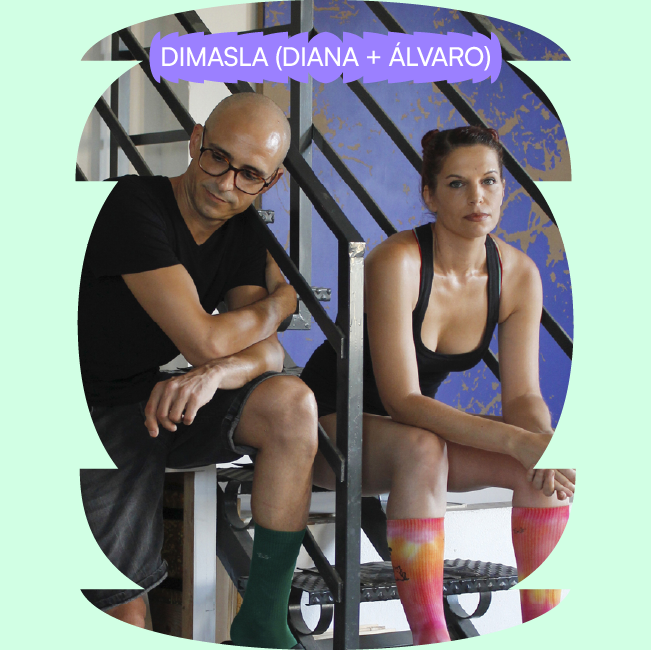
The practice of the collective DIMASLA (Diana + Álvaro) is situated at a fertile intersection between contemporary art, ecological thinking, and a philosophy of experience that shifts the emphasis from production to attention. Faced with the visual and material acceleration of the present, their work does not propose a head-on opposition, but rather a sensitive reconciliation with time, understood as lived duration rather than as a measure. The work thus emerges as an exercise in slowing down, a pedagogy of perception where contemplating and listening become modes of knowledge.

In the work of DIMASLA (Diana + Álvaro), the territory does not function as a framework but rather as an agent. The landscape actively participates in the process, establishing a dialogical relationship reminiscent of certain eco-critical currents, in which subjectivity is decentralized and recognized as part of a broader framework. This openness implies an ethic of exposure, which is defined as the act of exposing oneself to the climate, the elements, and the unpredictable, and this means accepting vulnerability as an epistemological condition.

The materials—fabrics, pigments, and footprints—serve as surfaces for temporary inscriptions and memories, bearing the marks of time. The initial planning is conceived as an open hypothesis, allowing chance and error to act as productive forces. In this way, the artistic practice of DIMASLA (Diana + Álvaro) articulates a poetics of care and being-with, where creating is, above all, a profound way of feeling and understanding nature.


In a historical moment marked by speed and the overproduction of images, your work seems to champion slowness and listening as forms of resistance. Could it be said that your practice proposes a way of relearning time through aesthetic experience?

Diana: Yes, but more than resistance or vindication, I would speak of reconciliation—of love. It may appear slow, but it is deliberation; it is reflection. Filling time with contemplation or listening is a way of feeling. Aesthetic experience leads us along a path of reflection on what lies outside us and what lies within.


The territory does not appear in your work as a backdrop or a setting, but as an interlocutor. How do you negotiate that conversation between the artist’s will and the voice of the place, when the landscape itself participates in the creative process?

Álvaro: For us, the landscape is like a life partner or a close friend, and naturally this intimate relationship extends into our practice. We go to visit it, to be with it, to co-create together. We engage in a dialogue that goes beyond aesthetics—conversations filled with action, contemplation, understanding, and respect.

Ultimately, in a way, the landscape expresses itself through the material. We respect all the questions it poses, while at the same time valuing what unsettles us, what shapes us, and what stimulates us within this relationship.


The Conquest of the Rabbits I & II. 2021. Process.


In your approach, one senses an ethic of exposure: exposing oneself to the environment, to the weather, to others, to the unpredictable. To what extent is this vulnerability also a form of knowledge?

Diana: For us, this vulnerability teaches us a great deal—above all, humility. When we are out there and feel the cold, the rain, or the sun, we become aware of how small and insignificant we are in comparison to the grandeur and power of nature.

So yes, we understand vulnerability as a profound source of knowledge—one that helps us, among many other things, to let go of our ego and to understand that we are only a small part of a far more complex web.


Sometimes mountains cry too. 2021. Limestone rockfall, sun, rain, wind, pine resin on acrylic on natural cotton canvas, exposed on a blanket of esparto grass and limestone for two months.. 195 cm x 130 cm x 3 cm.


Your works often emerge from prolonged processes of exposure to the environment. Could it be said that the material—the fabrics, the pigments, the traces of the environment—acts as a memory that time writes on you as much as you write on it?

Álvaro: This is a topic for a long conversation, sitting on a rock—it would be very stimulating. But if experiences shape people’s inner lives and define who we are in the present moment, then I would say yes, especially in that sense.

Leaving our comfort zone has led us to learn from the perseverance of plants and the geological calm of mountains. Through this process, we have reconciled ourselves with time, with the environment, with nature, with ourselves, and even with our own practice. Just as fabrics hold the memory of a place, we have relearned how to pay attention and how to understand. Ultimately, it is a way of deepening our capacity to feel.


The fox and his tricks. 2022. Detail.


To what extent do you plan your work, and how much space do you leave for the unexpected—or even for mistakes?

Diana: Our planning is limited to an initial hypothesis. We choose the materials, colours, places, and sometimes even the specific location, but we leave as much room as possible for the unexpected to occur. In the end, that is what it is really about: allowing nature to speak and life to unfold. For us, both the unexpected and mistakes are part of the world’s complexity, and within that complexity we find a form of natural beauty.